- Home
- NON-FICTION
- Arts, Crafts & Fashion
- Design
- Gauguin and Polynesia
Gauguin and Polynesia
For information on how we process your data, read our Privacy Policy
Thank you. We will email you when this book is available to order
You must sign in to add this item to your wishlist. Please sign in or create an account
Description
Product details
| Published | 04 Nov 2025 |
|---|---|
| Format | Paperback |
| Edition | 1st |
| Extent | 448 |
| ISBN | 9781801105248 |
| Imprint | Apollo |
| Dimensions | 198 x 129 mm |
| Publisher | Bloomsbury Publishing |
About the contributors
Reviews
-
Imagine a book about Gauguin written by someone who truly knows, first hand, the Pacific islands, their history, their cultures. Imagine an author capable of looking at Gauguin's paintings not as illustrations of 'primitivism' or 'colonialism' but as attempts – failures, successes, improbabilities – to come to terms with another way of life. This is the book. There is no other like it.
T. J. Clark, art historian and author of The Painting of Modern Life
-
An expansive and meticulously researched account of Gauguin's life and art ... a valuable contribution to art history.
Samuel Reilly, ArtReview
-
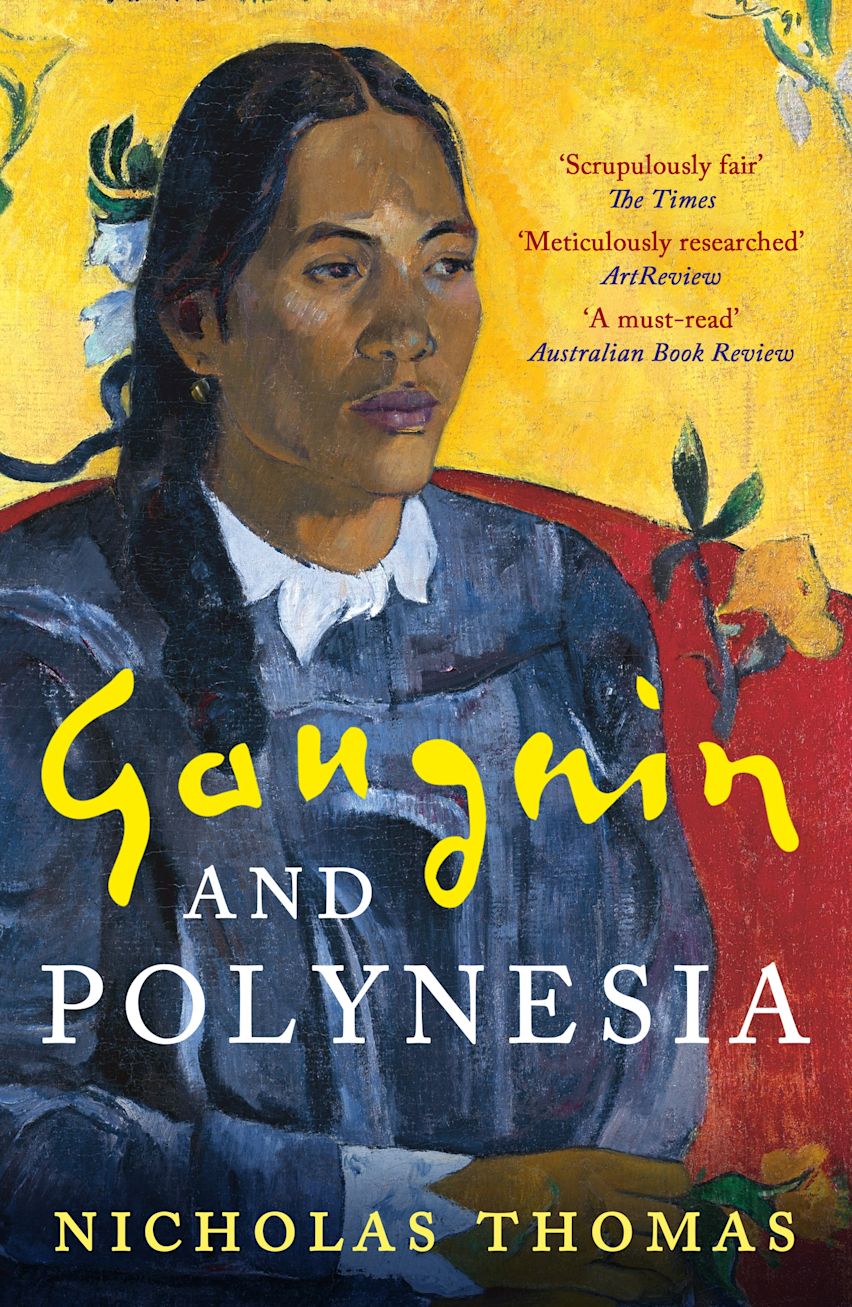
[Thomas's] portrait of Gauguin is scrupulously fair ... If not on Gauguin's side, Thomas is always on the side of the people and places Gauguin encounters. He writes with authority on the art, craft and textiles of the different island traditions and examines what Gauguin cherry-picked and co-opted for his purposes ... He writes evocatively and exactly about the paintings.
Laura Freeman, The Times
-
Thomas offers a nuanced version of Gauguin's works as at once obviously open to influence and highly attentive to the particulars of the Polynesian world.
Michael Kerr, Apollo
-
Rewarding ... offers plenty of new perspectives on Gauguin's later years
Martin Bailey, The Art Newspaper
-
It is Thomas's expertise in Polynesian societies that brings many of the insights here ... The Gauguin who emerges is not suddenly a more attractive figure. But his pictures gain nuance and the man himself can be seen as more than merely a sexual predator gorging himself in paradise.
Michael Prodger, Literary Review