- Home
- ACADEMIC
- Middle East
- Middle East - Other
- Persian Gardens and Pavilions
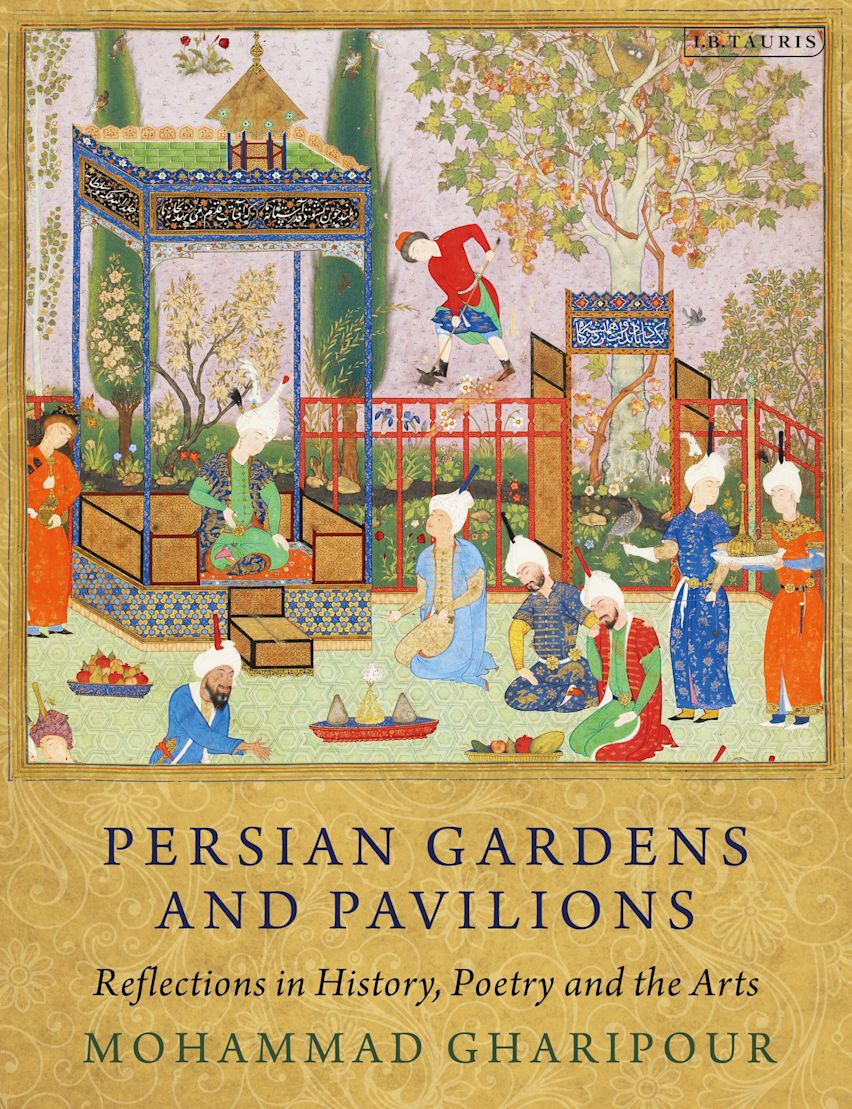
Persian Gardens and Pavilions
Reflections in History, Poetry and the Arts
Persian Gardens and Pavilions
Reflections in History, Poetry and the Arts

Please note that this product is not available for purchase from Bloomsbury websites.
You must sign in to add this item to your wishlist. Please sign in or create an account
Description
Product details
| Published | 30 Mar 2013 |
|---|---|
| Format | Hardback |
| Edition | 1st |
| Extent | 256 |
| ISBN | 9781780761213 |
| Imprint | I.B. Tauris |
| Illustrations | 64 colour plates, 30 integrated bw |
| Dimensions | 246 x 189 mm |
| Publisher | Bloomsbury Publishing |
About the contributors
Reviews
-
Mohammad Gharipour's fine book focuses on Persian gardens and the permanent or temporary structures within them, during the period from the fifteenth through the eighteenth centuries, but includes a useful concise survey of references to gardens in earlier literature stretching back to ancient Sumer, the Bible and the Qur'an. A scholarly book, it includes extensive apparatus of glossary, notes and sources, and 100 illustrations, many in color, generally of high quality and beautiful to study. It relies heavily on textual sources, including histories and poetry and travelers' accounts especially, and also pictorial sources, especially manuscript illuminations. Its wide scope seeks to set the garden in its social and historical context as a place for meetings and display and pleasure, as well as sometimes places of production. It goes beyond earlier treatments of the theme, including even color visualizations of Haravi's proposal for a "paradise" garden in the fifteenth century, and has systematic investigations of many questions, especially in regard to structures, such as tents, or thrones in gardens, and also discusses what can be said about the types and arrangements of plants."
Lawrence Nees, university of Delaware, CHOICE
-
Much has been written about Islamic gardens and Islamic architecture. Mohammad Gharipour usefully discusses the relationship between the two…the contents are clearly arranged.
Caroline Stone, SAUDI ARAMCO WORLD (US)
ONLINE RESOURCES
Bloomsbury Collections
This book is available on Bloomsbury Collections where your library has access.