- Home
- ACADEMIC
- Literary Studies
- North American and Caribbean Literature
- Québec's Broken Futures
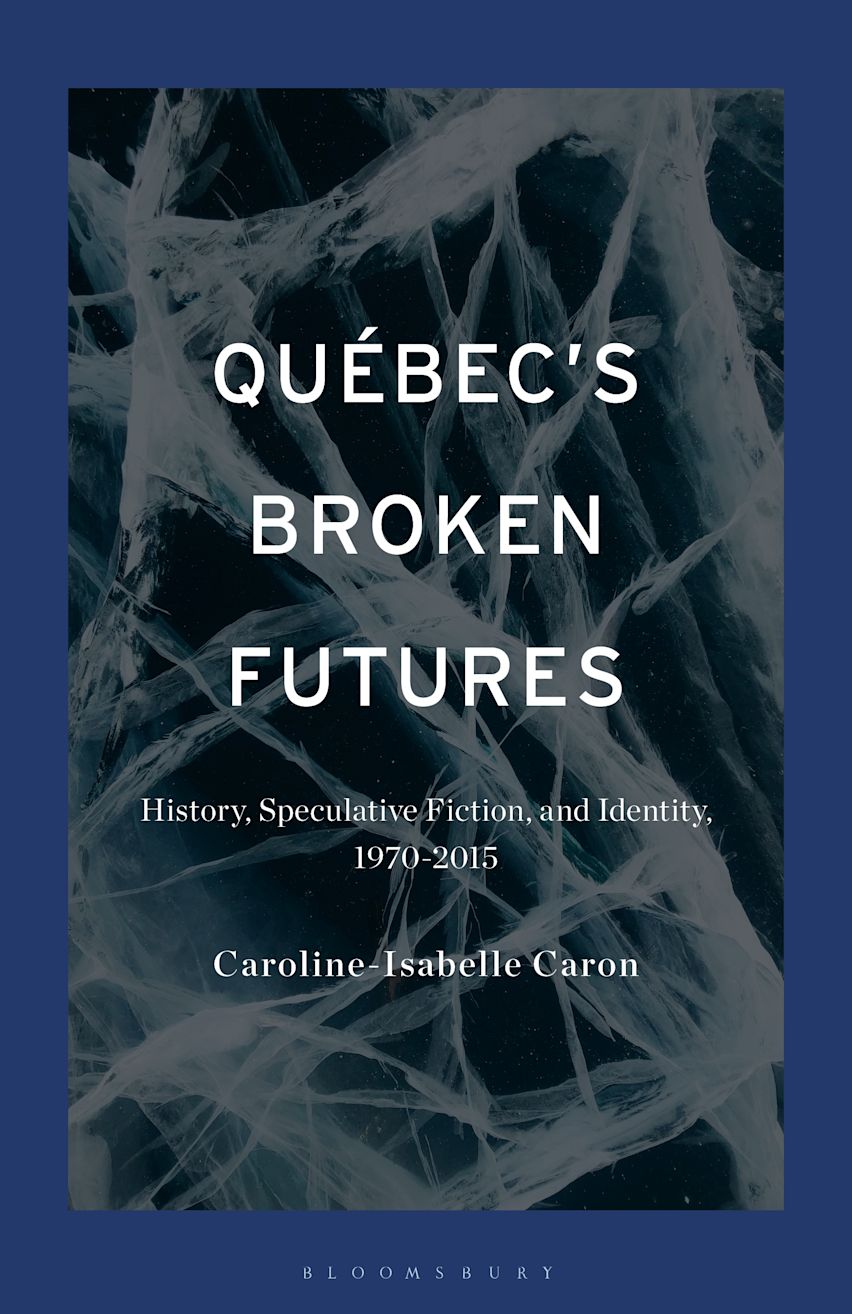
Québec's Broken Futures
History, Speculative Fiction, and Identity, 1970–2015
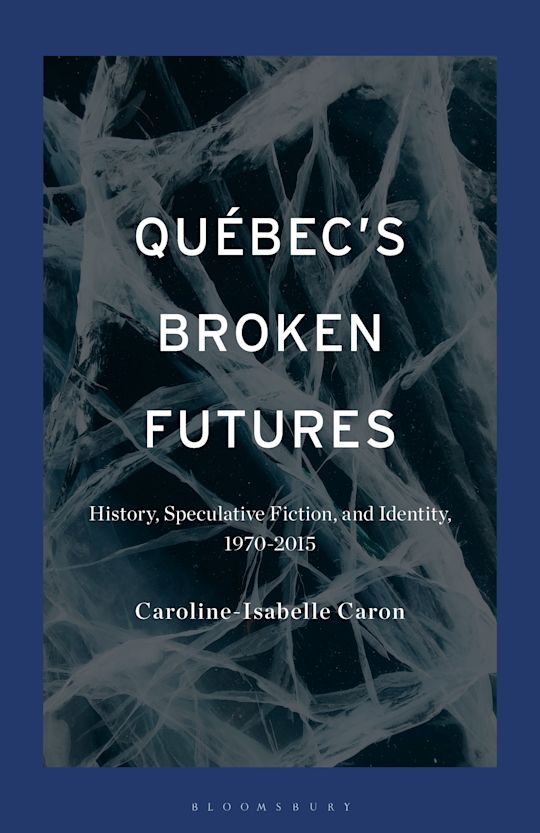
Québec's Broken Futures
History, Speculative Fiction, and Identity, 1970–2015

For information on how we process your data, read our Privacy Policy
Thank you. We will email you when this book is available to order
You must sign in to add this item to your wishlist. Please sign in or create an account
Description
Caroline-Isabelle Caron explores how Speculative Fiction from Québec from the 1970s to 2015 has eerily echoed alarmist thoughts concerning Québec independence and Québec's place in the space-time continuum of history, from the first explorers to Turtle Island to the present and well into the future.
Speculative fiction, no matter how fictional, is an inherently historical literary genre. With this in mind, this book presents an in-depth analysis of Québec's identity question as viewed through the prism of Speculative Fiction. It proposes innumerable configurations of a future that is, more often than not, fractured and bleak. Caron argues that these works both fictionalize and amplify broader collective fears and social anxieties around long term survival, language, ethnicity, race, religion, fascism, oppression and colonialism, while projecting the contemporary interpretations of Québec's past into the future. In doing so, Speculative Fiction from Québec reveals a constant preoccupation with the meanings of agency, individuality, collectivity, nationality, and territory in the same period.
Table of Contents
About the Author
Introduction
1. Of Past and Present and Future
2. Of Québec Nazis and Other Xenophobes
3. Of Alternate Histories and Could-Have-Beens
4. Of the Colonial Future
5. Can Future Québec Be “Normal”?
Bibliography
Index
Product details
| Published | Aug 06 2026 |
|---|---|
| Format | Ebook (Epub & Mobi) |
| Edition | 1st |
| Pages | 304 |
| ISBN | 9781978764606 |
| Imprint | Bloomsbury Academic |
| Publisher | Bloomsbury Publishing |
About the contributors
Reviews
-
An important dive into Québec's social imaginaries. This foundational book sets the path for a much-needed dialogue between historiography and speculative fiction, between how we understand the past and how we project ourselves in the future. In a world that must face its own broken futures, Caron's ultimate argument for hope should resonate well beyond our province.
Martin Hébert, Director of the Department of Anthropology, Laval University, Canada
-
What do Captain Kirk and Bonhomme Carnaval have in common?
With this intelligent and ambitious book, Caroline-Isabelle Caron proposes nothing less than a brilliant historiographical intervention: that Québec's science fiction constitutes a privileged site for understanding how a society imagines itself.
What a refreshening, unexpected and most stimulating addition to Quebec historiography!
Drawing from a large spectrum of canonic western thinkers of temporality, from phenomenology, sociology, intellectual history and epistemology, historian Caron understands the construction of past and future within the present.
Evoking Janus-faces, her multi-angled research is at the crossroads of contemporary Canadian and Quebecois' intellectual production and the careful analysis of an understudied genre, Science-Fiction, published between 1970 and 2015.
Caron suggests that if national narratives are constructed, speculative fiction offers a laboratory in which one may observe their mechanics. Québec's Broken Futuresdemonstrates how stories of invasion, extremism, erasure, colonialism, difference, and political independence convey cultural anxieties about language, identity, sovereignty, and belonging.
Echoing Koselleck's insight that time can only be expressed through spatial metaphors, Caron invites the readers to redraw the map of Quebec's imaginary of self, while exposing the scaffolding of its national narrative.
An exceptional read, which stems from a playful, while rigorous, important questioning.Anne Trépanier, Senior Lecturer, Carleton University, Canada