Free Movement and Welfare Access in the European Union
Re-Balancing Conflicting Interests in Citizenship Jurisprudence


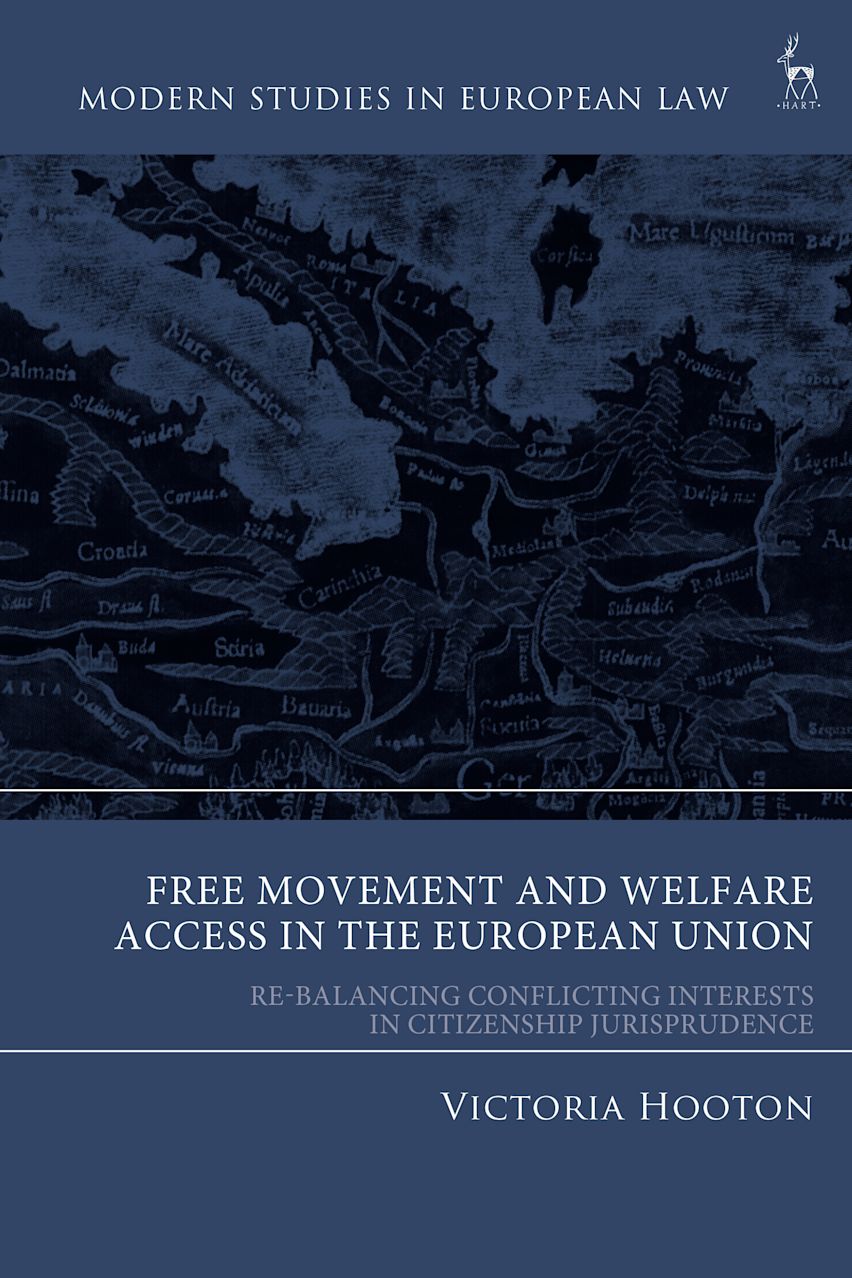
Free Movement and Welfare Access in the European Union
Re-Balancing Conflicting Interests in Citizenship Jurisprudence
Description
This book assesses the balancing act between EU free movement law, fundamental EU objectives and Member States' concerns regarding their welfare systems. It takes a novel dual approach: namely combining doctrinal analysis of EU citizenship case law with an examination of mobility data. This allows the study to clearly show an imbalance between the representation and protection of these conflicting interests in EU case law. It goes further, identifying avenues for reform and highlighting the importance of the principle of proportionality for attaining a legitimate balance of interests. In a field in which much has been written, this offers a truly original perspective. It will be much welcomed by scholars of EU free movement and citizenship law.
Table of Contents
2. Residency and Welfare Access for Intra-EU Jobseekers
3. Residency and Welfare Access for Mobile Students
4. Residency and Welfare Access for Economically Inactive Citizens
5. Intra-Union Mobility and the Justifiability of Imbalance
6. Rebalancing Interests: Towards Better Co-Governances of Union Citizenship
Product details
| Published | 04 Apr 2024 |
|---|---|
| Format | Ebook (PDF) |
| Edition | 1st |
| Pages | 336 |
| ISBN | 9781509966875 |
| Imprint | Hart Publishing |
| Series | Modern Studies in European Law |
| Publisher | Bloomsbury Publishing |

Reviews

ONLINE RESOURCES
Bloomsbury Collections
This book is available on Bloomsbury Collections where your library has access.
Related Titles