Thomas Bernhard's Afterlives


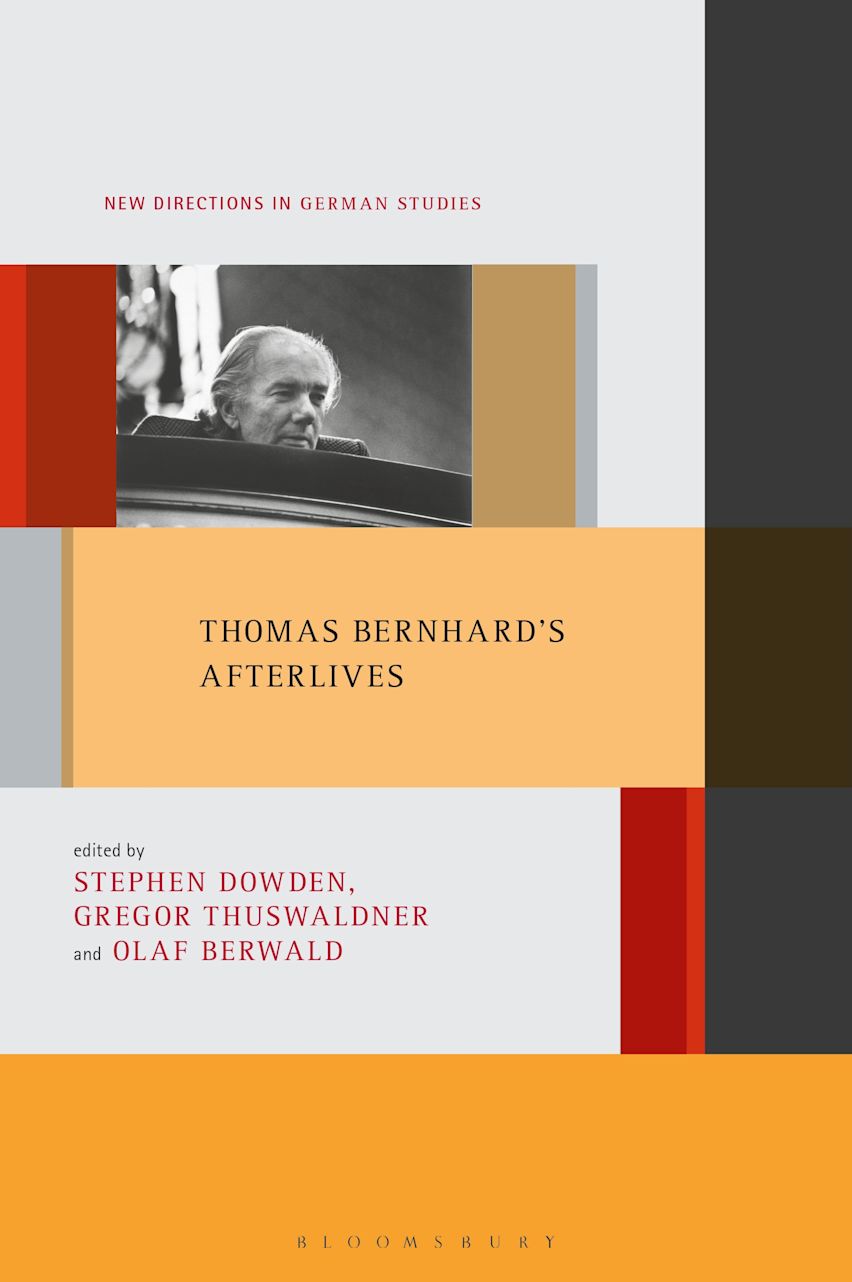
Thomas Bernhard's Afterlives
Description
In his prose fiction, memoirs, poetry, and drama, Thomas Bernhard (1931-1989)--one of the 20th century's most uniquely gifted writers--created a new and radical style, seemingly out of thin air. His books never “tell a story” in the received sense. Instead, he rages on the page, he rants and spews vitriol about the moral failures of his homeland, Austria, in the long amnesiac aftermath of the Second World War.
Yet this furious prose, seemingly shapeless but composed with unparalleled musicality, and taxing by conventional standards, has been powerfully echoed in many writers since Bernhard's death in 1989. These explorers have found in Bernhard's singular accomplishment new paths for the expression of life and truth.
Thomas Bernhard's Afterlives examines the international mobilization of Bernhard's style. Writers in Italian, German, Spanish, Hungarian, English, and French have succeeded in making Bernhard's Austrian vision an international vision. This book tells that story.
Table of Contents
Stephen Dowden (Brandeis University, USA)
1. The Afterlife of Thomas Bernhard in Contemporary Austrian Literature
Katya Krylova (University of Aberdeen, UK)
2. How Not to Begin: Wrestling with Thomas Bernhard
Kata Gellen (Duke University, USA)
3. Bernhard, Sebald, and Photography in Holocaust Memory
Agnes Mueller (University of South Carolina, USA)
4. Radical Style: Bernhard, Sontag, Kertész
Stephen Dowden (Brandeis University, USA)
5. The Stains of Cultural Inheritance: Thomas Bernhard and Philip Roth
Byron Spring (Lincoln College, University of Oxford, UK)
6. Gaddis before Bernhard before Gaddis
Martin Klebes (University of Oregon, USA)
7. Thomas Bernhard, a Writer for Spain
Heike Scharm (University of South Florida, USA)
8. Immersions into Bernhard's Works in Recent Francophone Literature
Olaf Berwald (Kennesaw State University, USA)
9. Thomas Bernhard's Influence on Gabriel Josipovici's Monologue Novels
Gregor Thuswaldner (Whitworth University, USA)
10. Thomas Bernhard, Italo Calvino, Elena Ferrante, and Claudio Magris: From Postmodernism to Anti-Semitism
Saskia Elizabeth Ziolkowski (Duke University, USA)
11. Thomas Bernhard's Extinction: Variations/Variazioni/Variaciones
Juliane Werner (University of Vienna, Austria)
Notes on Contributors
Bibliography
Index
Product details

| Published | 01 Oct 2020 |
|---|---|
| Format | Ebook (Epub & Mobi) |
| Edition | 1st |
| Extent | 264 |
| ISBN | 9781501351525 |
| Imprint | Bloomsbury Academic |
| Series | New Directions in German Studies |
| Publisher | Bloomsbury Publishing |

Reviews

ONLINE RESOURCES
Bloomsbury Collections
This book is available on Bloomsbury Collections where your library has access.
Related Titles